Search This Blog

Monday, 19 January 2015

K & T Energy Budget


Click on image above for full view
Basically what this says is that, because Earth cannot create heat and can only absorb and reflect what comes from the Sun, it's not possible for heat reflected, by so called green house gases, to be greater than the Sun's.
KT Earth Energy Budget Fig3Most everyone knowledgeable on this subject has heard of the “K&T Energy Budget” (Click on diagram). So how did Kiehl and Trenberth help debunk climate alarm? 
We have energy incoming from the Sun…thats the 342 W/m^2.  Well sure, the Sun is a source of energy, it is powered by nuclear reactions which liberate energy.
And then we have energy incoming from “greenhouse gas backradiation”.  There’s 168 + 67 = 235 absorbed energy coming from the Sun…and then there’s 324 coming from the atmosphere, 38% more energy than from the Sun.
It just magically appears over there, on the right hand side of their diagram.
Now the sun has a nuclear power source of energy.
The atmosphere has no source of energy, no source of power, has no chemical or nuclear reactions going on to liberate energy.
It is thus impossible for the atmosphere to be a source of energy, let alone to provide 38% more energy than comes from the Sun.
This debunks climate alarm science, without any additional consideration required, since this is the “reasoning” it subscribes to in general.  Climate alarm is based on the impossible, and the nonsensical.  It’s from these types of energy budgets that alarm is created.  Well yes, these diagrams are indeed alarming, for their amazing mind-boggling obvious errors.
And why do Kiehl and Trenberth, and climate alarm, get into such a mess?  Of course, it’s because they don’t get the incoming energy from the Sun correct in the first place.  Their “168 absorbed by surface” means that Sunlight could only ever make a surface it strikes to heat up to -40 degrees Celsius.
Wow, that’s pretty cold.  Can’t sunlight melt ice?  Isn’t much, much warmer sunshine actually responsible for driving the climate?  Yes and yes, but this is contradicted and denied by Kiehl and Trenberth’s pseudoscience.
So who’s wrong?  Is the Sun wrong, or is Kiehl and Trenberth wrong?
It’s pretty easy to see who.

Sunday, 18 January 2015

2014 warmest year? Can't be measured say scientists.

Here, a number of scientists challenge 2014 claims.
A number of reputable scientists also immediately cast doubt on the federal government’s declaration Friday.
“Using the normal rules of science, is 58.46 degrees then distinguishable from 58.45 degrees? In a word, ‘No,’” wrote Patrick J. Michaels on the Cato Institute website.

Read more at  http://www.wnd.com/2015/01/scientists-undermine-hottest-year-claim-by-feds/#dfhXUbtgd7QKQ412.99


“There has not been any significant man-made global warming in the past, there is none now, and there is no reason to expect any in the future,” he said. “The computer models that predicted the warming have failed to verify. There has been no warming in 18 years. The ice at the poles is stable. The polar bears are increasing. The oceans are not rising.”
Read more at http://www.wnd.com/2015/01/scientists-undermine-hottest-year-claim-by-feds/#arbJyYieRGTQtasD.99


“There are dueling global datasets – surface temperature records and satellite records – and they disagree. The satellites show an 18 year plus global warming ‘standstill’ and the satellite was set up to be ‘more accurate’ than the surface records.”
Read more at  http://www.wnd.com/2015/01/scientists-undermine-hottest-year-claim-by-feds/#dfhXUbtgd7QKQ412.99


“AP’s Borenstein can be trusted to shill for U.N.’s climate summit. … Borenstein ignores tide gauges on sea level showing deceleration of sea level rise and ignores satellite temperatures which show the earth in an 18 year ‘pause’ or ‘standstill’ of global warming.”

Read more at http://www.wnd.com/2015/01/scientists-undermine-hottest-year-claim-by-feds/#dfhXUbtgd7QKQ412.99

Friday, 5 December 2014

This week we are told that 'warming is continuing'.


Ok I am not a climate scientist but I have read enough science on climate change to know that books must've been cooked for this week's media release by The Met. Office . 


There has already been enough eminent confirmation that there has been no global warming since 1997. Of course we know that we have been steadily climbing out of the Little Ice Age, when there used to be ice skating on the Thames, and that was the origin of our Christmas card scenes too. But that seems to have plateaued off since 1997 and by all accounts we are headed back down again too.

So yes climate has been getting warmer for some 200 years but contrary to it being anthropogenic, it is just one more wave in a cyclic history and warming seems to have stopped. So how does that square with this week's reports? Well this is the answer. Read here how the Warmists are still cooking the numbers! 

Monday, 19 May 2014

It seems all greens are nasty about their religions.

From Local Transport Today by Andrew Forster

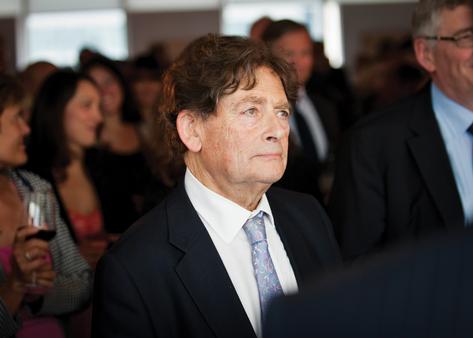
Lawson rails against ‘religious fervour’ of the climate change ‘alarmists’

“I have never in my life experienced the extremes of personal hostility, vituperation and vilification which I – along with other dissenters, of course – have received for my views on global warming and global warming policies'. He says. 

Yes and you see the same attitudes against pro drivers from the anti driver religion too Nigel. Read on.

Policies to dramatically cut carbon dioxide emissions are politically, economically and scientifically irrational, says the former chancellor Lord Lawson, who thinks alarm about man-made climate change has similarities to religion

Andrew Forster
Fear about man-made climate change doesn’t feature quite so prominently in the transport policy debate today as it did five or ten years ago but it continues to be a fundamental building block in how policy-makers frame ‘the transport problem’. With the exception of grassroots organisations such as motorist group the Alliance of British Drivers, there appears to be universal acceptance within the transport sector that man-made climate change is real, that it poses a serious threat to life on this planet, and that we should mitigate its impacts by dramatically cutting carbon dioxide emissions.

But how will historians look back at this thinking? Nigel Lawson thinks the judgment will be very harsh indeed. The former Conservative chancellor wrote a book in 2008, An appeal to reason: a cool look at global warming, and a year later set up a think-tank, the Global Warming Policy Foundation, to challenge what he regarded as widespread misinformation in the scientific, political and economic debate about global warming. The Foundation’s director is Benny Peiser, who LTT interviewed in 2006 and 2008 as climate alarm reached its peak in the UK, with the Government’s world-leading Climate Change Act 2008 committing the UK to cut carbon dioxide and other greenhouse gases by 80% by 2050 against 1990 levels.

Lawson believes policy-makers have got things badly wrong and his explanation for how this has happened reads something like this: take a credible theory; record a temperature rise that excites scientists; set up a United Nations body to look into the matter; build some computer models with flawed assumptions that generate projections of runaway temperatures; stoke these fears with the help of a largely uncritical media and a vibrant environmental movement; and, finally, add some politicians who see ‘saving the planet’ as the ultimate cause célêbre.

Lawson recently fleshed out his thinking in a lecture in Bath, which the GWPF circulated this month. As a distinguished politician, he has had plenty of bad-tempered exchanges with political opponents but none have been so bitter as  those over climate change. “I have never in my life experienced the extremes of personal hostility, vituperation and vilification which I – along with other dissenters, of course – have received for my views on global warming and global warming policies.”

After a recent appearance on the BBC, many listeners complained to the broadcaster that Lawson was unqualified to speak on the topic because he wasn’t a climate scientist. “I must admit I am strongly tempted to agree with that... on the clear understanding, of course, that everyone else plays by the same rules. No more statements by Ed Davey, or indeed any other politician, including Ed Miliband, Lord Deben [John Gummer] and Al Gore. Nothing more from the Prince of Wales, or from Lord Stern. What bliss!”

But Lawson said he and other non-scientists had every right to speak about the topic because, ultimately, it was not a scientific one. “The issue is not climate change but climate change alarmism. And alarmism is a feature not of the physical world, but of human behaviour.

“There is, indeed, an accepted scientific theory – the greenhouse effect – which I do not dispute and which, the alarmists claim, justifies their belief and their alarm,” he said. The effect of increasing atmospheric concentrations of carbon dioxide was, however, highly uncertain. Temperature records suggest that mean global temperature increased by about 0.5ºC in the last quarter of the 20th century. “But since then, and wholly contrary to the expectations of the overwhelming majority of climate scientists, who confidently predicted that global warming would not merely continue but would accelerate, given the unprecedented growth in global carbon dioxide emissions, there has been no further warming at all.

“To be precise, the latest report of the Intergovernmental Panel on Climate Change, a deeply flawed body whose non-scientist chairman is a committed climate alarmist, reckons that global warming has latterly been occurring at the rate of 0.05ºC per decade, plus or minus 0.1ºC. In other words, the observed rate of warming is less than the margin of error.”

Lawson said this showed that the computer models used by the climate science community to predict future dramatic temperature rises were “scarcely worth the computer code they are written in” and “almost certainly mistaken”. 
Evidence, what evidence? 
Some pundits have pointed to the floods that affected much of southern England this winter, caused by a shift in the jetstream, as evidence of man-made climate change. But Lawson was scathing. There was “no credible scientific theory that links this behaviour [the movement of the jetstream] to the fact that the earth’s surface is some 0.8C warmer than it was 150 years ago”.

“That has not stopped some climate scientists, such as the publicity-hungry chief scientist at the UK Met Office, Dame Julia Slingo, from telling the media that it is likely that ‘climate change’ (by which they mean warming) is partly to blame.”

Society was now much more sensitised to extreme weather events, he said, “partly because of sensitivity to the climate change doctrine, and partly simply as a result of the explosion of global communications”.  “It is perfectly true that many more people are affected by extreme weather events than ever before. But that is simply because of the great growth in world population.”

With temperature datasets suggesting there stable average global surface temperatures for 17 years, Lawson said adaptation, not mitigation, was the correct response to the possibility of warming resuming. “It clearly makes sense to make ourselves more resilient and robust in the face of extreme weather events, whether or not there is a slight increase in the frequency or severity of such events.

“Astonishingly, this is not the course on which our leaders in the Western world generally, and the UK in particular, have embarked. They have decided that what we must do, at inordinate cost, is prevent the possibility (as they see it) of any further warming by abandoning the use of fossil fuels.”

Lawson said there was “no way in which this could be remotely cost-effective”. Lord Stern’s 2006 report for the UK Government, The Economics of Climate Change, suggested otherwise but Lawson said it was “a bible for the economically illiterate”, full of “dodgy economics”, and had been “comprehensively demolished by the most distinguished economists on both sides of the Atlantic”.

Stern based his conclusions on weighing up the costs and benefits of action to cut emissions, but Lawson said other commentators ignored any economic assessment of the case for mitigation at all. These people urged dramatic reductions in fossil fuel use on the basis of the ‘precautionary principle’ – the possibility that failing to kerb emissions will have a catastrophic outcome.

This made no sense either, said Lawson. “A moment’s reflection would remind us that there are a number of possible catastrophes, many of them less unlikely than that caused by runaway warming… and there is no way we can afford the cost of unlimited spending to reduce the likelihood of all of them.”

Turning to the politics of cutting emissions, Lawson said there was “no chance” of a meaningful global agreement at the supposedly ‘crunch’ United Nations-sponsored conference in Paris next year. Developing countries such as China rightly saw fossil fuels as a vital way of delivering economic growth and lifting their populations out of poverty.

“We use fossil fuels not because we love them, or because we are in thrall to the multinational oil companies, but simply because they provide far and away the cheapest source of large-scale energy, and will continue to do so, no doubt not forever, but for the foreseeable future.”

The UK’s Climate Change Act was pointless. “There is little point in setting an example, at great cost, if no one is going to follow it. Around the world, governments are now gradually watering down or even abandoning their decarbonisation ambitions.”

So why, Lawson wondered, has Western society “succumbed to the self-harming collective madness that is climate change orthodoxy?”   “It is difficult to escape the conclusion that it has in effect become a substitute religion, attended by all the intolerant zealotry that has so often marred religion in the past, and in some places still does today.”

The two creeds that used to vie for popular support in the western world – Christianity and Communism – were in decline, “yet people still feel the need both for comfort and for the transcendent values that religion can provide”.

“It is the quasi-religion of green alarmism and global salvationism, of which the climate change dogma is the prime example, which has filled the vacuum, with reasoned questioning of its mantras regarded as little short of sacrilege.  Throughout the ages, something deep in man’s psyche has made him receptive to apocalyptic warnings that the end of the world is nigh.

“It is a cruel irony that, while it was science which, more than anything else, was able by its great achievements, to establish the age of reason, it is all too many climate scientists and their hangers-on who have become the high priests of a new age of unreason.”  


Thursday, 6 February 2014

Calling people 'headless chickens' Chazza becomes one.

At the very least HRH Prince of Wales should now hear full presentations delivered by Lords Monckton and Lawson and their supporting scientists.
 
With credit to What's Up With That for the following:


Lord Monckton invites ‘Chazza’ to spar over ‘unroyal’ global-warming remark
His Royal Highness The Prince of Wales,
Clarence House, London.


Candlemas, 2014

Your Royal Highness’ recent remarks describing those who have scientific and economic reason to question the Establishment opinion on climatic apocalypse in uncomplimentary and unroyal terms as “headless chickens” mark the end of our constitutional monarchy and a return to the direct involvement of the Royal Family, in the Person of our future king, no less, in the cut and thrust of partisan politics.
Now that Your Royal Highness has offered Your Person as fair game in the shootout of politics, I am at last free to offer two options. I need no longer hold back, as so many have held back, as Your Royal Highness’ interventions in politics have become more frequent and less acceptable in their manner as well as in their matter.
Option 1. Your Royal Highness will renounce the Throne forthwith and for aye. Those remarks were rankly party-political and were calculated to offend those who still believe, as Your Royal Highness plainly does not, that the United Kingdom should be and remain a free country, where any subject of Her Majesty may study science and economics, may draw his conclusions from his research and may publish the results, however uncongenial the results may be.

The line has been crossed. No one who has intervened thus intemperately in politics may legitimately occupy the Throne. Your Royal Highness’ arrogant and derogatory dismissiveness towards the near-50 percent of your subjects who no longer follow the New Religion is tantamount to premature abdication. Goodnight, sweet prince. No more “Your Royal Highness.”

Hi, there, Chazza! You are a commoner now, just like most of Her Majesty’s subjects. You will find us a cheerfully undeferential lot. Most of us don’t live in palaces, and none of us goes everywhere with his own personalized set of monogrammed white leather lavatory seat covers.

The United Kingdom Independence Party, which until recently I had the honor to represent in Scotland, considers – on the best scientific and economic evidence – that the profiteers of doom are unjustifiably enriching themselves at our expense.

For instance, even the unspeakable Intergovernmental Panel on Climate Change has accepted advice from me and my fellow expert reviewers that reliance upon ill-constructed and defective computer models to predict climate was a mistake. Between the pre-final and final drafts of the “Fifth Assessment Report,” published late last year, the Panel ditched the models and substituted its own “expert assessment” that in the next 30 years the rate of warming will be half what the models predict.
In fact, the dithering old fossils in white lab coats with leaky Biros sticking out of the front pocket now think the rate of warming over the next 30 years could be less than in the past 30 years, notwithstanding an undiminished increase in the atmospheric concentration of plant food. Next time you talk to the plants, ask them whether they would like more CO2 in the air they breathe. Their answer will be Yes.

The learned journals of economics are near-unanimous in saying it is 10-100 times costlier to mitigate global warming today than to adapt to its supposedly adverse consequences the day after tomorrow.

Besides, in the realm that might have been yours there has been no change – none at all – in mean surface temperature for 25 full years. So if you are tempted to blame last year’s cold winter (which killed 31,000 before their time) or this year’s floods (partly caused by the Environment Agency’s mad policy of returning dozens of square miles of the Somerset Levels to the sea) on global warming, don’t.

You got your science and economics wrong. And you were rude as well. And you took sides in politics. Constitutionally, that’s a no-no. Thronewise, mate, you’ve blown it.
On the other hand, we Brits are sport-mad. So here is option 2. I am going to give you a sporting second chance, Charlie, baby.

You see, squire, you are no longer above politics. You’ve toppled off your gilded perch and now you’re in it up to your once-regal neck. So, to get you used to the idea of debating on equal terms with your fellow countrymen, I’m going to give you a once-in-a-reign opportunity to win back your Throne in a debate about the climate. The motion: “Global warming is a global crisis.” You say it is. I say it isn’t.
We’ll hold the debate at the Cambridge Union, for Cambridge is your alma mater and mine. You get to pick two supporting speakers and so do I. We can use PowerPoint graphs. The Grand Debate will be televised internationally over two commercial hours. We let the world vote by phone, before and after the debate. If the vote swings your way, you keep your Throne. Otherwise, see you down the pub.

Cheers, mate!

Viscount Monckton of Brenchley


Monday, 23 September 2013


Press Release 23/09/13

Lord Lawson Calls For Independent Review Of Official UK Climate Predictions

Major Flaw In Met Office Computer Model Identified


Press Release
London, 23 September
 

In a briefing paper issued today, the Global Warming Policy Foundation (GWPF) reveals that a significant problem has been identified in the UK's official UKCP09 climate predictions.

Nic Lewis, an independent climate scientist, has published research that shows that because of the way the predictions are prepared using the Met Office's computer climate model, they are bound to predict fairly high warming in the UK whatever observational data are fed into the process.

The UK climate predictions programme informs decisions to invest billions of pounds in climate change adaptation measures across the public and private sectors. The inherent warm bias in the predictions means that much of this spending is probably unnecessary.

Andrew Montford, the author of the GWPF briefing paper, said:

“There are potentially billions of pounds being misspent on the basis of these predictions. The government has little choice but to withdraw them pending a review of the way they are put together”.

GWPF chairman Lord Lawson is calling for an independent panel of climate scientists and statisticians to review the UKCP09 predictions.

Full briefing paper available here (PDF)

Contact:

Andrew Montford
m: 07523 350729
e: awmontford@gmail.com

Tuesday, 14 May 2013

Prince Charles clearly listens to the Luvvies & Greens


Prince Charles Vs Climate Sceptics - Again
With The Deepest Respect, Charles, Please Do Shut Up 

Prince Charles has attacked corporate lobbyists and climate change sceptics for turning the Earth into a "dying patient", making his most outspoken criticism yet of the world's failure to tackle global warming just when the heir to the throne is assuming a growing number of the duties of what is supposed to be an apolitical monarchy. Prince Charles's views were reinforced by Lord Stern, author of the 2006 report on the economics of climate change, who called sceptics and lobbyists "forces of darkness" who would be driven back. --Fiona Harvey, The Guardian, 9 May 2013


The prince's remarks were attacked by climate change sceptics and dismissed by several lobbyists. Benny Peiser, of the Global Warming Policy Foundation, the thinktank founded by Lord Lawson, which takes a climate-sceptic stance, accused the prince of poisoning the debate on climate change with "apocalyptic language that a government minister would not use", and accused him of being happy for consumers to pay more in their energy bills for green policies. --Fiona Harvey, The Guardian, 9 May 2013


Benny Peiser, director of the Global Warming Policy Foundation - a climate-sceptic think tank set up by former Conservative chancellor Nigel Lawson - sharply criticised the prince. "He doesn't make himself popular by attacking half the British public, who are known to be sceptical." Dr Peiser said the heir to the throne should "have a conversation with his father", who he said had a different view. "It's not about the science," he said. "It's about the apocalyptic rhetoric that is poisoning the debate." --BBC News, 9 May 2013


In the fields of medicine, agriculture, architecture and energy production, the prince is taking positions that are intensely partisan; and some of these are areas in which decisions have monumental economic implications for every family in the land… The prince certainly needs someone to point out to him that the planet is not “dying” and that it was doing just fine when CO2 concentrations were vastly higher than they are now or are ever likely to be as a result of whatever amount of fossil fuels we burn. --Dominic Lawson, The Sunday Times, 12 May 2013


But no matter how much you and I agree, Prince Charles should have remained silent. Charles strays into areas of political dispute over what should be done [about global warming]. Charles's lack of judgment may explain why, though he will take over duties such as attending Commonwealth heads of government conferences, the Queen will not agree to either abdication or a regency. Charles is a dangerously divisive figure – not because he may destroy the monarchy (which I would welcome), but because he threatens an already fragile public confidence in democracy.  --Peter Wilby, The Guardian, 10 May 2013


The Prince of Wales has warned that mankind is on the brink of “committing suicide on a grand scale” unless urgent progress is made in tackling green issues such as carbon dioxide (CO2) emissions, intensive farming and resource depletion. Adopting uncharacteristically apocalyptic language, the Prince said the world was heading towards a “terrifying point of no return” and that future generations faced an “unimaginable future” on a toxic planet. However Dr Benny Peiser, director of Lord Lawson’s Global Warming Policy Foundation, said the Prince’s views were still out of step with mainstream thinking. “He is really a good representative of the environmental movement as such and it is not a personal issue,” he said. But he added that the “extreme alarm and extreme concern” was “over the top and not helpful to the debate”. “It doesn’t convince any governments or any ministers and in the end it is over the top and won’t be heard.” --Jonathan Brown, The Independent 23 November 2012


Wednesday, 13 March 2013

Polar Bears are doing well

Global Warming Policy Foundation

1) Polar bears are a conservation success story
Their numbers have rebounded remarkably since 1973 and we can say for sure that there are more polar bears now than there were 40 years ago. Although we cannot state the precise amount that populations have increased (which is true for many species – counts are usually undertaken only after a major decline is noticeable), polar bears join a long list of other marine mammals whose populations rebounded spectacularly after unregulated hunting stopped: sea otters, all eight species of fur seals, walrus, both species of elephant seal, and whales of all kinds (including grey, right, bowhead, humpback, sei, fin, blue and sperm whales). Once surveys have been completed for the four sub-populations of polar bears whose numbers are currently listed as zero, the total world population will almost certainly rise to well above the current official estimate of 20,000-25,000 (perhaps to 27,000-32,000?).

2) The only polar bear subpopulation that has had a statistically significant decline in recent years is the one in
Western Hudson Bay. A few others have been presumed to be decreasing, based on suspicions of over-harvest- of over-harvest of over-harvesting, assumed repercussions of reduced sea ice and/or statistically insignificant declines in body condition – not actual population declines.

3) Polar bears in the
US portion of the Chukchi Sea are in good condition and reproducing well, while sea ice in the Bering Sea has rebounded from record lows over the last ten years – good reasons not to be worried about polar bears in the Chukchi.

4) A survey by the
Nunavut government in 2011 showed that polar bear numbers in Western Hudson Bay have not declined since 2004 as predicted and all available evidence indicates that Hudson Bay sea ice is not on a steadily precipitous decline – good reasons not to be worried about Hudson Bay bears.

Full report

Dr Susan Crockford
Dr Susan Crockford is an evolutionary biologist and an expert on polar bear evolution. She has been working for 35 years in archaeozoology, paleozoology and forensic zoology and is an adjunct professor at the University of Victoria, British Columbia, Canada. She is the author of Rhythms of Life: Thyroid Hormone and the Origin of Species.


Matt Ridley: We Should Be Listening To Susan Crockford
The Global Warming Policy Foundation, 13 March 2013

Foreword To Susan Crockford’s Ten Good Reasons Not To Worry About Polar Bears

In 1978 three friends and I spent six weeks camped in a valley in Spitsbergen. The possibility that we would meet a polar bear there, even in winter, let alone summer, was far-fetched and we slept soundly in our tents without taking any precautions. We used a nearby hut for shelter from the weather. Last year I enquired about using that hut again and was told that it was no longer habitable: ‘due to damages made by polar bears’.

The west coast of
Spitsbergen is now thickly inhabited by bears in summer, as it was not then. In recent years they have killed all the eggs and goslings laid by barnacle geese on offshore islands: breeding success has been near zero. Something similar has been happening on Cooper Island off Alaska, where bears have predated black guillemot nests in recent years. In both cases, scientists are attempting to explain these changes in terms of bears being stranded on land by the loss of ice, but there never was summer sea ice (and rarely winter ice) on the west coast of Spitsbergen. Nobody with local experience is in any doubt that bear numbers have boomed in the region, thanks to the cessation of hunting in the 1970s, and that this rather than any change in ice cover locally is the chief reason for their more frequent encounters with bears. Yet the Polar Bear Specialist Group calls the trend in the Barents Sea bear sub-population ‘unknown’. Indeed, Dr. Susan Crockford has uncovered the astonishing fact that this entire population, which the Norwegian government has estimated as containing more than 2,000 animals, is officially listed as ‘data deficient’ on a new PBSG’s map, as is true for several Canadian ones that have also been counted.

The same organization claims that eight of the polar bear’s sub-populations are decreasing, but read its own website and you will find that this is based almost entirely on projections and mathematical models. The official data table and map says that two of these eight sub-populations are only ‘thought’ or ‘believed’ to be declining – entirely due to hunting; four are in decline only according to computer models, despite some claims by ‘traditional ecological knowledge’ (ie, locals) that they are thriving; one has more than doubled but is now said to be ‘currently declining’ because of crowding, not climate change; and only one showed a real decline. The latest data show that even that decline (in the
West Hudson Bay population) has probably recently been reversed.

In other words, the claim that polar bear populations are declining at all, let alone due to climate change, is a manufactured myth, designed for media consumption and with

very little basis in fact. That it works all too well is demonstrated by an episode in 2011 involving Sir David Attenborough. In a television series the brilliant television presenter, unwisely diverging from neutral natural history, had asserted that the polar bear is already in trouble. When challenged by Lord Lawson that ‘the polar bear population has not been falling, but rising’, Sir David responded. He was quoted by The Daily Telegraph as saying ‘Most [polar bear populations] are in decline and just one is increasing – for a number of factors – one being they have stopped hunting…Lord Lawson is denying what the whole scientific community is accepting and working at and it is extraordinary thing for him to do’.

Much as I admire and like both men, I have to say that the evidence suggests that Lord Lawson’s account is closer to the truth. The International Union for the Conservation of Nature estimated in 1966 that there were 10,000 polar bears in the world; in 2006, the same source estimated that the population had risen to 20,000-25,000 bears. Had Sir David examined the text on the PBSG’s website he would have found that all but one of the eight sub-population declines he cited were in fact based on ‘beliefs’ or future projections. As demonstrated by another recent mistake in another television series, this time an exaggerated claim for temperature change in
Africa, Sir David is not being well served by his BBC researchers these days.

Zac Unger documents in his recent book Never Look a Polar Bear in the Eye, how polar bear ‘decline’ is now a large and lucrative industry and in places like Churchill, Manitoba, organisations like Polar Bears International cynically use the imagined plight of the bears to raise money, and push propaganda at young people about changing their lifestyles and those of their parents.

We’re empowered to teach these kids how to make a difference. It’s an enormous responsibility. Saving the polar bear is in their hands,

an activist explains to Unger, having flown school children by helicopter to a bear-proof camp so they can emote by video-conference to schools across
America. As Attenborough once said:

All these big issues need a mascot and that’s what the polar bear is.

Yet as Unger discovered and Susan Crockford confirms, increasingly the local people in places like Churchill look on the carnival of tourists, journalists and scientists with bemusement, knowing full well that even there – in one of the most southerly polar bear populations of all – the evidence of a decline in numbers, or of the health of the bears, is threadbare or non-existent. How much more threadbare that evidence is farther north, where the bears’ greatest problem is usually too much ice and therefore too few seals, is poorly known. The ideal habitat for polar bears is first-year ice that lasts well into summer, when they feed on fat young seals. The fact that this ice thins or breaks up enough to allow seals to feed during the autumn keeps the seal population healthy. Four to five months of ice-free fasting in early autumn is not exceptional for polar bears and two to three months is quite normal. The recent trend in most of the
Arctic – no change in winter ice extent but a decline in late summer ice extent – has been towards exactly this ideal combination.

Many scientists have grown frustrated with the domination of the polar bear story by dogmatic propagandists and have begun to speak out. Susan Crockford is one of them: a zoologist who is independent of the alarm industry and therefore free to make up her own mind. In this valuable paper, she has done a fine job of documenting the actual facts of the case as far as they are known.

Matt Ridley
Global Warming Policy Foundation


Wednesday, 6 February 2013

So man made CO2 is tiny.

An important new paper published today in Global Biogeochemical Cycles finds
that "In contrast to recent claims, trends in the airborne fraction of
anthropogenic carbon [dioxide] cannot be detected when accounting for the
decadal-scale influence of explosive volcanism and related uncertainties." In
other words, after accounting for the large effect of volcanic eruptions, ENSO,
and other uncertainties upon natural CO2 sinks, trends in the man-made fraction
of atmospheric CO2 "cannot be detected." Thus, despite an exponential increase
in man-made CO2 emissions, there is no statistically significant trend in the
man-made fraction of CO2 in the atmosphere.
This further suggests that man is not the primary cause of the increase of CO2
in the atmosphere, that temperature is responsible for the increase in CO2
levels due to out-gassing. According to the authors, "Our results highlight the
importance of considering the role of natural variability in the carbon cycle
for interpretation of observations and for data-model intercomparison."

Note man-made emissions are only about 4% of the total CO2 emissions in the
atmosphere, and CO2 only represents about 0.04% of the entire atmosphere

Click source to read more and link
Source Link: hockeyschtick.blogspot.co.uk

Wednesday, 23 January 2013

Climate crimes. Will the school kids be shown?


The Global Warming Policy Foundation, 23 January 2013

Ulli Kulke, Donner und Doria, 22 January 2013

These days, much is spoken and written about the destruction of our planet as a result of climate change. In his evocative film “Climate Crimes”, the Austrian filmmaker Ulrich Eichelmann who was an active member of WWF for 17 years and worked in conservation for decades, now documents that it is rather the reverse: he shows how many ecosystems, species, habitats and the cultural heritage too are threatened – but, as he sums up, “not by climate change, but by climate protection and the things done in its name.” It is predominantly hydropower and bioenergy projects that threaten to destroy precious areas of our planet’s nature.

That current climate policies harm conservation in many ways is nothing new, even if many do not want to admit it. However, no one so far has compiled the evidence as strongly and on a global scale as Eichelmann. His one-hour film, which is shown in several cinemas in Germany these days and also on Austrian television, is the result of two years of work that led his team to Brazil, Turkey, Iraq and to Indonesia, but also to the model country of climate protection, Germany, where crimes against nature are especially evident.
Eichelmann feels particularly affected by what he has found out in the course of his research; that’s because, as he says, he has been deeply involved in the fight against climate change – until he discovered some time ago “that something went wrong here “.

The individual stages of the film:

Brazil: The huge dams of the South American country, each of which put dozens of square miles of rainforest under water for the generation of electricity, have always been a problem for the Amazon basin. But now, as the momentum of climate policy is added, all laborious progress in terms of environmental sustainability, which has been be built up in recent decades, and even all moratoria, have gone overnight. 60 mega dams of several kilometres in length and several hundreds of medium size are planned in the Amazon basin in coming years. One of them alone, the Belo Monte Dam on the Xingu River, will flood a forested area larger than the Lake of Constance; it threatens 200 fish species and will force 20,000 people to relocate. One of the very few large nesting sites of Amazon turtles will fall victim to the dam. The Catholic Bishop Erwin Kräutler, who works there, calls Brazil’s current energy policies of Brazil the “death knell” for the Amazon rainforest.

Turkey: One of the oldest cities in Anatolia, Hasankeyf, renowned for its extensive cave dwellings and other buildings dating from the fourth century, built on the border between the Eastern Roman and the Sassanid Empire, will simply disappear from the map. The reason: the Ilisu dam, which is built there to produce “clean energy”, will ensure that the Tigris will swallow the city. With luck, the upper tips of the ancient minarets could still poke out of the reservoir.
By the way: Do you remember the worldwide outrage over the Taliban, when they destroyed the giant statue of Buddha of Bamiyan? These barbarians, it was said at that time! The loss of Hasankeyf would be vastly greater, yet outrage outside
Turkey did not happen – in the name of climate protection people keep quite.

Iraq: There was also great indignation worldwide when the Iraqi dictator Saddam Hussein in the mid 1990s dried up the vast Mesopotamian marshes near Basra, out of revenge for what he deemed as the missing fighting spirit of its inhabitants during the first Gulf War. The wetlands, where many species live and people have their agricultural livelihoods, have since been partially restored laboriously. Now, they will finally disappear because dams further upstream will deny them enough water.

Germany: It is hardly possible to describe in words the damage done to German nature, as Eichelmann describes it in his film. The country side is made desolate by monoculture of corn fields stretching to the horizon, and biosphere reserves are not spared. Everything is done just to ensure enough biofuels are produced to meet Germany’s climate targets – all in the name of a supposedly clean energy. Many bird species have already disappeared completely, others will follow. Hares and other soil dwellers will not be seen again. The largest biogas plant in the country needs 1,000 tons of corn per day. 7,000 plants have already been built, about 1,000 on average will be added each year. Due to generous subsidies, the corn farmers can pay any rent, so the rents have more than doubled and farms are going bankrupt. By the way: in 2011 Germany could not cover its cereal needs for the first time.

Indonesia: Even greater is the sprawl of monocultures in Kalimantan, the Indonesian part of Borneo, where palm oil plantations – not least for the production of biodiesel – have destroyed the rainforest almost completely. The last orang-utans are losing their habitat.

Eichelmann presents calculations in his film which show that almost every single project he presents, e.g. each “Climate Crime”, is responsible for emitting more carbon dioxide or methane instead of reducing emissions. Although he has changed from being a climate change campaigner into a fighter against this kind of climate protection, Eichelmann still assumes that greenhouse gases pose a risk to the global climate. He thinks the only chance to counter the risk is to question the idea of global economic growth. Only in this way, he argues, the world could prevent the “Climate Crimes”, which his film documents.

You do not have to share – like this writer – the growth denial strategy in order to be impressed by the movie which is extremely well and comprehensively researched. The development of the global climate, the warming pause in the last decade and a half, and the climate forecasts for the next few years could indicate that it might be useful to transform our energy supply in the long run; but there is no reason today to throw out “the baby with the bathwater”, as economist Niko Paech says in the film – or to accept that “climate protection is used as a cover for environmental crimes.”

My fear is, however, that a growth denial strategy would be nothing else than throwing the baby out with the bathwater. The fact is: only growth-oriented economies can afford to protect the environment. To crack this historic challenge is not impossible theoretically, but it could lead to similar questionable experiments as documented in “Climate Crimes”.

We must take the time to plan sensibly and not to rush into “head-over-heels” measures. Let us beware of exaggerated doomsday prophecies and instead protect nature. Either way, growth or denial, greenhouse hysteria or cool head: “Climate Crimes” is one of the most interesting and daring films on the subject.

Translation Philipp Mueller

see also: New Film Blasts Climate Movement